Against All Odds: The Gambler Who Used Math to Crack Horse Racing
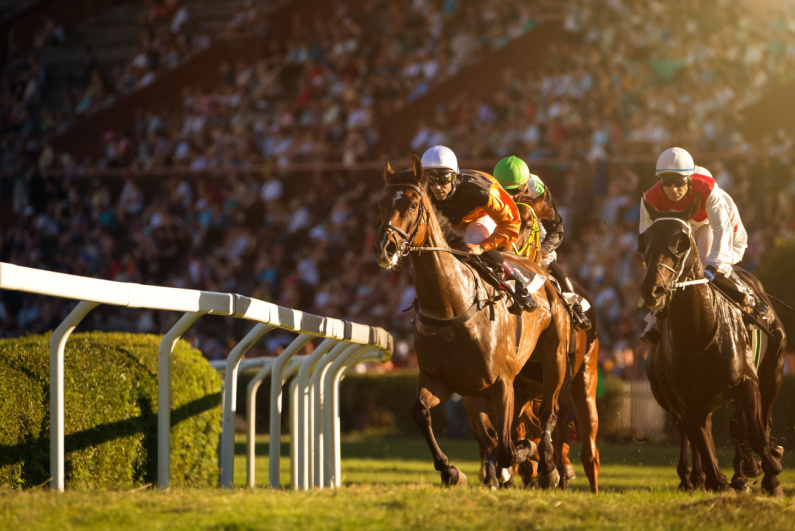 Bill Benter has made $1bn after using math to crack the horse racing code. [Image: Shutterstock.com]
Estimated net worth of $1bn
The gambling world is full of mysterious, terrifying, and wonderful stories, from bizarre bad beats to hair-raising heists, murders, and even ghosts. But when it comes to beating the odds, the tale of gambler Bill Benter – who cracked the horse-racing code – springs to mind.
created an algorithm to beat horse racing in Hong Kong
In the 1980s, Benter created an algorithm to beat horse racing in Hong Kong and was the then-anonymous winner – along with associate Paul Coladonato – of the 2001 Triple Trio (picking the first three horses in three different races).
However, instead of claiming the $118m from the race, Benter and Coladonato left the money unclaimed, which was then distributed to a charitable fund in Hong Kong. Nevertheless, Benter managed to beat Hong Kong’s racing system and nearly 40 years later has an estimated net worth of close to $1bn.
The story of Benter
Benter, who grew up in Pittsburgh, was a diligent student and studied physics in college. Through his younger years, he traveled throughout Europe and Africa; however, it was at the age of 22 that he decided to quit college, board a Greyhound bus, and move to Las Vegas to play cards.
Benter had recently read Beat the Dealer by maths professor Edward Troop, which detailed how to overcome the house’s advantage in blackjack.Soon after moving to Las Vegas, Benter got a job at a 7-Eleven where he earned $3 an hour. Taking his wages to casinos, the most he would win in a night was around $40, but it wasn’t until he was applying for a job at McDonald’s that he was introduced to the man who would change his life: Alan Woods, a former insurance actuary-turned-gambler and head of an Australian card-counting team.
Benter soon joined the team and quickly saw his earnings, while playing blackjack, rise to $80,000 a year. Their winning streak came to an end in 1984 when Benter, Woods, and others were blacklisted from a number of casinos in Las Vegas.
Switching to track
After nine months of studying horse racing and advanced statistics, Benter and Woods moved to Hong Kong. There, they would study the racing run by the Hong Kong Jockey Club twice a week while correcting Benter’s algorithm. Within the first year of setting up in Hong Kong, the pair had lost $120,000 of their $150,000 stake.
Benter flew back to Las Vegas to try and get more investment, but he was unsuccessful. Woods went to South Korea to gamble. They met back a few months later after Woods had accumulated more cash, but he also wanted more ownership in the business – 90%. Benter said no, and the pair went their separate ways.
his first year in Hong Kong, Benter made close to $600,000
In 1988, Benter made his return to Hong Kong with an improved algorithm, but with only 20 horse racing variables. After his first year in Hong Kong, Benter made close to $600,000. However, it wasn’t until he started using the Hong Kong Jockey Club’s publicly available betting odds that his winnings skyrocketed.
His algorithm was able to split the real odds of a horse. So, if a bookmaker had the horse odds at 3.50, but the model calculated that it should be 2.80, Benter would bet on that edge.Using the odds as a starting point, he made $3m during the 1990-91 racing season. Fast-forward to 1997 and Benter’s team had increased their profit to more than $50m, resulting in Benter losing his rights to bet through computers and phones.
As he wasn’t banned from betting altogether, Benter designed a new way of placing bets: using a printing system that turned blank slips into betting slips with the boxes already marked before feeding the tickets into a betting terminal.
One final bet
Through the turn of the 21st century, Benter was still working with his betting scheme, which now worked with 120 factors per horse.
Benter said if he won, he’d leave the money on the table
It was in 2001 that he decided to place one final bet on Hong Kong’s Triple Trip. With 51,000 combinations, Benter said if he won, he’d leave the money on the table. Jockey Club policy stated that if unclaimed the money would go to a charitable trust. Unsurprisingly, he won.
Benter later sent an anonymous note to the Jockey Club stating his intentions. At the time, head of betting Henry Chan said: “Although this is bad luck for one winner, it means there will be a lot of winners through the charities.”