Nevada’s 93rd Gambling Anniversary: How Far Has the US Casino Capital Come?
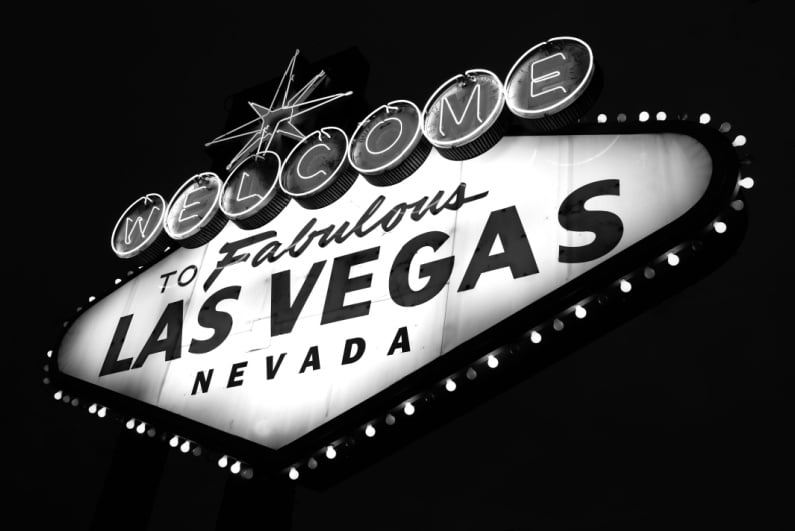 Las Vegas is celebrating its 93rd gambling anniversary, and its history is littered with mobsters, nuclear bombs, and celebrities. [Image: Shutterstock.com]
A date to celebrate
Nevada first legalized gambling 93 years ago this week.
It’s a move that set the state on a path towards greatness – a moment that would eventually cement Las Vegas as arguably the most important entertainment center in, not only the US, but the world. Sin City is a place where visitors can let loose, live out their wildest fantasies, and possibly even make a bit of cash in the process if they’re lucky.
the state hit a 22nd straight month of $1bn+ GGR in December
As for the gambling operators, they make an absolute killing. Last year, Las Vegas regained its crown as the location with the highest gross gaming revenue in the world, defeating Macau for the first time since 2005. The record $15.52bn total for Nevada came as the state hit a 22nd straight month of $1bn+ GGR in December.
With Nevada’s gambling sector arguably the best it has ever been, there is no better time to reflect on how far it has come. VegasSlotsOnline News has delved into the history books to provide you with some insight into why gambling got the go ahead in 1931 and how it has changed in the 93 years since.
A cure for depression
The 30s were an era that would forever change Las Vegas, a city with a population of 5,000 people at the beginning of the decade. That transormation began when the federal government decided to build the biggest dam in the world on the Colorado River, just South East of Las Vegas. The Hoover Dam project resulted in a soaring population as workers moved to the area.
As a result, at a time when the rest of the US experienced the first years of the Great Depression, Las Vegas saw a boom. City commissioners improved large parts of the town, including new sewers, a modern hospital, and the widening of streets for cars. Life was centered around Fremont Street, which was adorned in neon for different clubs, bars, and hotels.
Despite this, the town didn’t have enough jobs for everyone that was arriving. As a desert town with limited natural resources, Las Vegas was never going to attract major car manufacturers or other such businesses. Those unable to find work ended up staying in shack towns which dotted the local area, waiting for employment at the dam or elsewhere.
That’s when gambling entered the fray.
Gambling begins
Las Vegas gambling started with one man – Tom Carroll – known to many as the father of Las Vegas’ casino industry. A Las Vegas real estate developer who wanted a better future for himself and his town, Carroll started putting ads in the Las Vegas papers in 1930, arguing that gambling could make Las Vegas the playground of the US.
On March 19, 1931, Carroll’s wish came true. Nevada became the only state where gambling was legal as the Senate approved legislation. They only allowed six gaming licenses in April that year and getting one wasn’t easy. Operators had to get a license from Clark County and then appear before the Nevada Gaming Commission. As a result, it was a small group of locals initially running gambling in Las Vegas.
Nevada sailed through what for other states were some of the darkest days in their history
Just as these roulette wheels started spinning, the economic despair of the Depression reached its height in the rest of the country. This meant Las Vegas and Nevada sailed through what for other states were some of the darkest days in their history.
Mob rules
The first resort, at least in the sense we think of today, was opened by the Cornero brothers, who had a reputation for illegally transporting alcohol from Canada to California during the prohibition. Looking to get out of the smuggling trade, they built the Meadows Resort, which included a casino, dance floor, restaurants, and hotel.
Many believe the Meadows set a precedent that would define Las Vegas gambling for years to come. It was an elaborate and luxurious operation ran by people who had been involved in organized crime. The Flamingo, one of the most famous casinos built in Las Vegas, was another that followed this pattern, developed by famous mobster Bugsy Siegel in 1947.
In the 1950s, the mob doubled down its domination of the casino industry. Gangsters were the first to associate Las Vegas with the glitz and glamour of celebrities. Since those in organized crime ran nighclubs in other major cities, they brought in performers such as the “Rat Pack,” Liberace, Judy Garland, and Jerry Lewis.
Las Vegas resorts also began bringing in tourists looking for a little more unusual entertainment at this time. The Nevada desert became the location of a nuclear test site as the US looked to expand its arsenal amid the Cold War with the Soviet Union. The city was located around 65 miles away from this site and resorts would host parties on the nights before early morning detonations.
Mob out, corporations in
In 1967, Nevada passed the Corporate Gaming Act. This made it much easier for corporations to run casinos in the state. It was a move that ultimately would lead to the demise of the mob’s control of the gambling hub.
That same year, billionaire Howard Hughes, widely known as the man who transformed Las Vegas into a more refined cosmopolitan city, purchased the Desert Inn. He remarked at the time that he wanted to “make Las Vegas as trustworthy and respectable as the New York Stock Exchange,” adding that he hoped for a “city of the future.”
the new respectability encouraged other public corporations to get involved
Hughes later became Nevada’s largest single property owner, taking over more casinos across the state. At his height, around 20% of the hotel rooms on the Strip were under his control. As Hughes gained territory, mob ownership of the Strip ended and the new respectability encouraged public corporations to get involved throughout the 1970s.
During that decade, Las Vegas got its first real competitor in Atlantic City, which began its gambling sector in 1978. To ensure they stayed on top, Nevada resorts began widening the type of attractions they offered, upping their game to a level never seen before and cementing the region’s gambling mecca position.
Times are changing
That era kickstarted the Las Vegas that we know and love today.
As mentioned, Sin City reached never-before-seen heights last year. The city survived the wing clipping of the COVID-19 pandemic to bounce back in mid-2021, breaking its annual gaming revenue record in that year. This only grew for the following two years, and looks set to continue for the foreseeable.
That said, the bright lights of Las Vegas have changed slightly over the past few years. For one, real estate firms such as Blackstone Group, Apollo Global Management, and VICI Properties have taken ownership of Strip casinos, renting their operations out to major casino giants. This has allowed the likes of MGM Resorts International to make some quick cash while retaining their presence on the Strip.
Some casino companies have vacated the Strip entirely. For instance, the passing of Las Vegas Sands owner Sheldon Adelson in 2021 prompted a new focus for the company. The casino operator sold its Vegas-based properties for $6.25bn shortly after his death, opting to focus on its real estate in Singapore and Macau.
MGM boss Bill Hornbuckle has confirmed that he is yet to see any signs of a recession
However, optimism is still rife among those who choose to remain despite fears of rising inflation. For instance, MGM boss Bill Hornbuckle has confirmed that he is yet to see any signs of a recession and is hopeful that growth can continue. While Wynn Resorts CEO Craig Billings acknowledged the sector is facing some issues, he believes it is strong enough to weather the storm.
Given 2024 figures, CEO optimism is well placed. Nevada gaming win surpassed previous records for January, paving the way for what could be another amazing year in the gambling hub. With the $1.2bn figure the largest ever reported for the month, and as we celebrate Las Vegas’s 93rd gambling anniversary, it seems that the sky really is the limit for the jewel in the US entertainment crown.