MGM Commits To Osaka Resort Following Lapse Of Escape Clause
MGM Commits To Osaka Resort Following Lapse Of Escape Clause
Share This Tags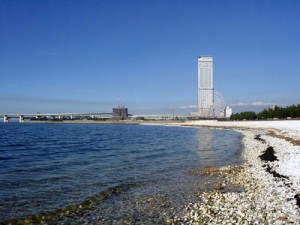
Osaka Bay
Japan for years has been seen as the “holy grail” of gaming, with the potential for up to $40 billion in annual gross revenues. When the country’s Integrated Resort (IR) development bill was approved in 2018, global operators rushed to secure one of the casino licenses. Among them was MGM Resorts International, which emerged victorious in its bid for the Osaka market. However, the path to realizing this ambitious project has not been without its challenges.
More than a year after winning the sole casino license in Japan, MGM Resorts has demonstrated its steadfast commitment to the Osaka IR project. In a recent earnings call, MGM’s president and CEO, Bill Hornbuckle, announced that the company has forfeited its right to withdraw from the ¥1.27 trillion (£6.72 billion/€8 billion/$8.89 billion) venture without penalty. This decision signals MGM’s determination to see the project through, despite the obstacles that have emerged along the way.
The Osaka IR project has faced a series of delays, the first of which was the COVID-19 pandemic. When the IR development bill was approved in 2018, the Japanese government had planned to offer three casino licenses in strategic locations around the country, with more to come after seven years. However, the pandemic caused global interest in Japan’s gaming market to stall, and the selection process was subsequently delayed.
In the end, only two operators – MGM in Osaka and Casinos Austria in Nagasaki – submitted bids for the available licenses, with MGM being the sole recipient of the go-ahead to proceed with its project.
The original agreement between MGM and its Japanese partner, Orix Corporation, included an escape clause that allowed the operator to back out of the project by September 2026 under certain conditions. These conditions included the failure of tourism to recover to pre-COVID levels, unfavorable financing terms, and an initial investment exceeding ¥1.27 trillion.
Unfortunately for MGM, the project has already met the latter benchmark, with the rise in construction costs pushing the initial investment to ¥1.27 trillion, up from the previously estimated ¥1.08 trillion. By waiving its opportunity to withdraw, MGM has demonstrated its unwavering commitment to the Osaka IR project.
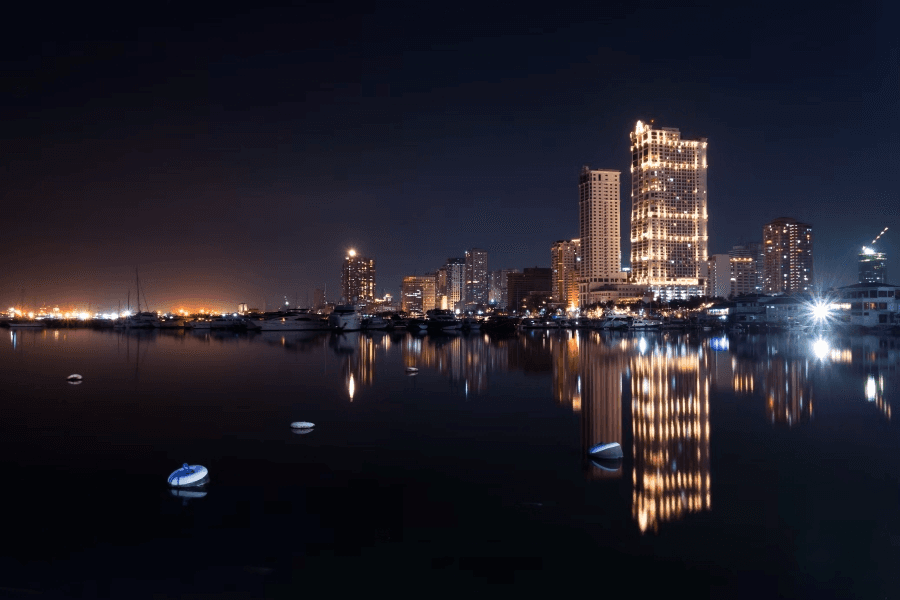
With the escape clause now surrendered, MGM and Orix, who each own a 40% stake in the Osaka IR KK operator, are full steam ahead in their preparations for the casino resort. Prep work on the 494-square-meter site on Yumeshima, a man-made island in Osaka Bay, is set to begin in September.
The resort, which is slated to open in the middle of 2030, will include Japan’s first casino, as well as 2,500 hotel rooms, a convention center, a shopping mall, and other amenities. MGM Osaka is projected to generate ¥520 billion in annual gross revenues, with approximately 80% of that coming from gaming operations.
One of the latest challenges facing the Osaka IR project is the concurrent development of facilities for the 2025 World Expo, which will also be held on Yumeshima. Expo organizers are concerned that the construction work on the MGM Osaka project will disrupt the event with noise and other environmental impacts.
To address this issue, the expo organizers have asked MGM to suspend construction for the duration of the six-month event. However, this would add more than ¥10 billion to MGM’s already ballooning costs. Local media reports suggest that Osaka Governor Hirofumi Yoshimura is working to broker a compromise, proposing a two-month pause during the Japan expo.
In addition to the logistical hurdles, the Osaka IR project must also navigate a complex regulatory landscape. Japan’s gaming industry is heavily regulated, with strict rules and guidelines governing everything from licensing to operations. MGM and its partners will need to ensure strict compliance with these regulations to maintain their license and continue the development of the resort.
Despite the challenges, the Osaka IR project represents a significant opportunity for MGM and its partners. The Japanese gaming market is widely regarded as the “holy grail” of the industry, with the potential for massive returns on investment. However, the project is not without its risks, including the ongoing impact of the COVID-19 pandemic, fluctuations in construction costs, and the regulatory environment.