Italy’s black market turnover now amounts to €25bn ($26.5bn) per year.

Italy’s black market turnover now amounts to €25bn ($26.5bn) per year.
Illegal operators do not offer the same customer protections as licensed firms.
Other EU nations with similar restrictions show the same black market trends.
Italy should take inspiration from the UK where channelization levels are high.
Paving the way
Italy – the land of delicious food, beautiful scenery, and… illegal gambling?
It could be argued that Italy was the birthplace of the European gambling industry. Ancient Romans took to gambling to entertain themselves at night, a pastime that spread to the people they conquered. Italy was also home to the first official gambling house to appear in Europe – the Ridotto in Venice, which opened in 1638.
struggled to combat addiction and black-market gambling for years
Given this information, you might think that Italy will have successfully learned how to keep its gambling market under control – but you would be mistaken. The nation has struggled to combat addiction and black-market gambling for years, a battle that became even more difficult in 2006 when the government regulated internet gambling too.
Now, this is not an issue restricted to Italy. Data shows that levels of problem gambling in European countries range from 0.3% to as much as 6.4% of the adult population. Italy sits somewhere in the middle of this. However, it’s the nation’s black-market growth that sets it apart from the rest of the continent, causing real concern.
Why the big fuss?
To assess the gravity of Italy’s issue, it is important to first understand the risks associated with black market gambling in any country.
The black market essentially constitutes any gambling company that is operating outside of a country’s regulated framework. This often includes offshore operators, who seek customers from a certain country despite being based elsewhere, or unlicensed operators from within the country itself who accept wagers despite having no legal right to do so.
they do not have to check if a customer has self-excluded on other sites
The dangers of this are clear. These operators are not bound by the usual rules and regulations regarding keeping customers safe. They do not have to offer safer gambling tools or conduct affordability checks. Perhaps most concerningly, they do not have to check if a customer has self-excluded on other sites or national registers before taking their money.
Black market gambling is a growing issue in Europe. Research from the Betting and Gaming Council found that strict measures on licensed operators have prompted the use of black-market operators to more than double in just two years, from 220,000 users to 460,000 in 2022. The amount staked is now in the billions of dollars per year.
An Italian problem
While the black-market issue is clearly a European one, Italy has seen some particularly troubling signs in recent years.
A recent report by local paper La Gazzetta dello Sport shed some light on the current situation. It reported that the overall turnover of illegal gambling in Italy now amounts to €25bn ($26.5bn) per year. Around 75% of that turnover comes from online gambling, at about €18.5bn ($19.6bn) of the total.
Revenue from that online turnover supposedly amounts to around €1bn for the illegal operators. As pointed out by the European Gaming and Betting Association (EGBA), this is equivalent to the combined regulated online gaming revenue of eight other EU countries combined. Namely, those nations include Malta (€70m), Croatia (€170m), and Lithuania (€170m) among others.
In the past year to date, the Italian Customs and Monopolies Agency has blocked access to 9,828 illegal gambling portals. That marks an increase of 400 from 2022, 143 of which came in the last month alone.
Gambling isn’t getting much positive press in Italy at the moment. Three Italian soccer players are facing the consequences of breaching gambling rules. Juventus star Nicolò Fagioli received a seven-month playing ban last week, while Newcastle’s Sandro Tonali and Aston Villa loanee Nicolo Zaniolo are still awaiting their fate.
And the cause?
Last week, the EGBA made its opinion clear regarding the cause of Italy’s black market growth. “The country’s ban on gambling advertising is clearly favoring the black market and should be revised,” the gambling body announced in a press release. The EGBA was referencing Italy’s blanket ban on gambling ads – including sports sponsorships – which was introduced in 2018 to combat problem gambling.
Niklas Lindahl warned that the ban would push people towards the black market
Notably, Italy Managing Director for LeoVegas Niklas Lindahl warned that the ban would push people towards the black market at the time. In an open letter to Deputy Prime Minister Luigi Di Maio, Lindahl also claimed that such a ban might be unconstitutional, taking away licensed companies’ rights to advertise. His pleading fell on deaf ears, however.
Five years on from the Italian government’s decision to go ahead with the ban and it certainly seems Lindahl may have been right after all. Black market gambling now accounts for 23% of all stakes placed in Italy, the third-highest total in Europe. But before we make any assumptions of the cause, let’s take a look at the three other EU nations at the top of the list:
Norway
Has a state monopoly system for online gambling, meaning gamblers have only one choice, Norsk Tipping. Its black market is the largest in Europe. Around 66% of all money staked in Norway goes to illegal operators.
France
Much like Norway, also has a monopolized gambling sector. State-owned Pari Mutuel Urbain and Française des Jeux run the market. France’s black market takes 57% of stakes.
Spain
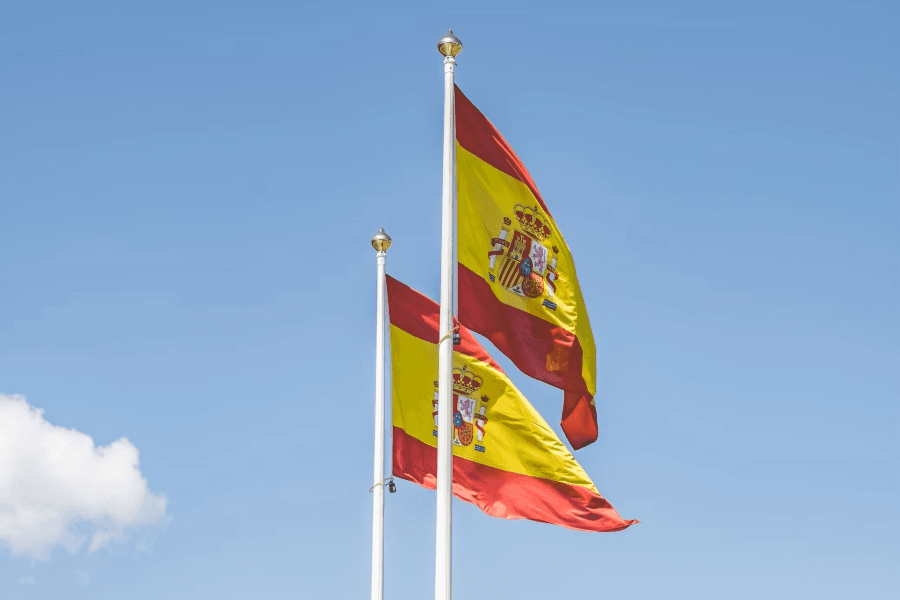
In 2020, introduced a near-total ban on gambling advertising. The nation now has the fourth-largest black market in Europe representing 20% of all money staked, just behind Italy.
The opposite effect
The link between these countries with the lowest channelization rates is clear to see. They are some of the most restrictive in terms of where their citizens can gamble or how licensed operators are able to advertise their services.
When confronted with the issue of problem gambling, the typical reaction of politicians unfamiliar with the matter is to punish the market itself. They will choose to impose restrictive legislation on licensed operators or even get rid of the market entirely, instead of listening to those who understand how damaging that course of action can be… *cough* Lindahl *cough*.
The same can be said for various industries in which addiction is common and overindulgence can have dangerous consequences. Prohibit the sale of alcohol and people will take their chances with homemade moonshine. Ban marijuana and users will buy it from dodgy dealers on the streets. The vital difference with online gambling is that the illegal version is always accessible from any device, from the comfort of the home.
97.6% of British customers gamble through licensed sites
If Italy wants to combat its growing problem, it might do well to look towards the UK – the European nation with the highest channelization rate. UK and Gaming Commission Chief Executive Andrew Rhodes recently boasted that 97.6% of British customers gamble through licensed sites. Despite pressure from anti-gambling groups, the nation has done well not to clip the wings of its legal operators. They are still able to advertise with general freedom, despite some sports-focused restrictions.
While it might have the oldest gambling sector in Europe, Italy is years behind some of its neighbors when it comes to protecting customers. To step into the modern age, it should focus more on ensuring its licensed operators are doing everything they can to protect customers rather than preventing them from actually acquiring any.